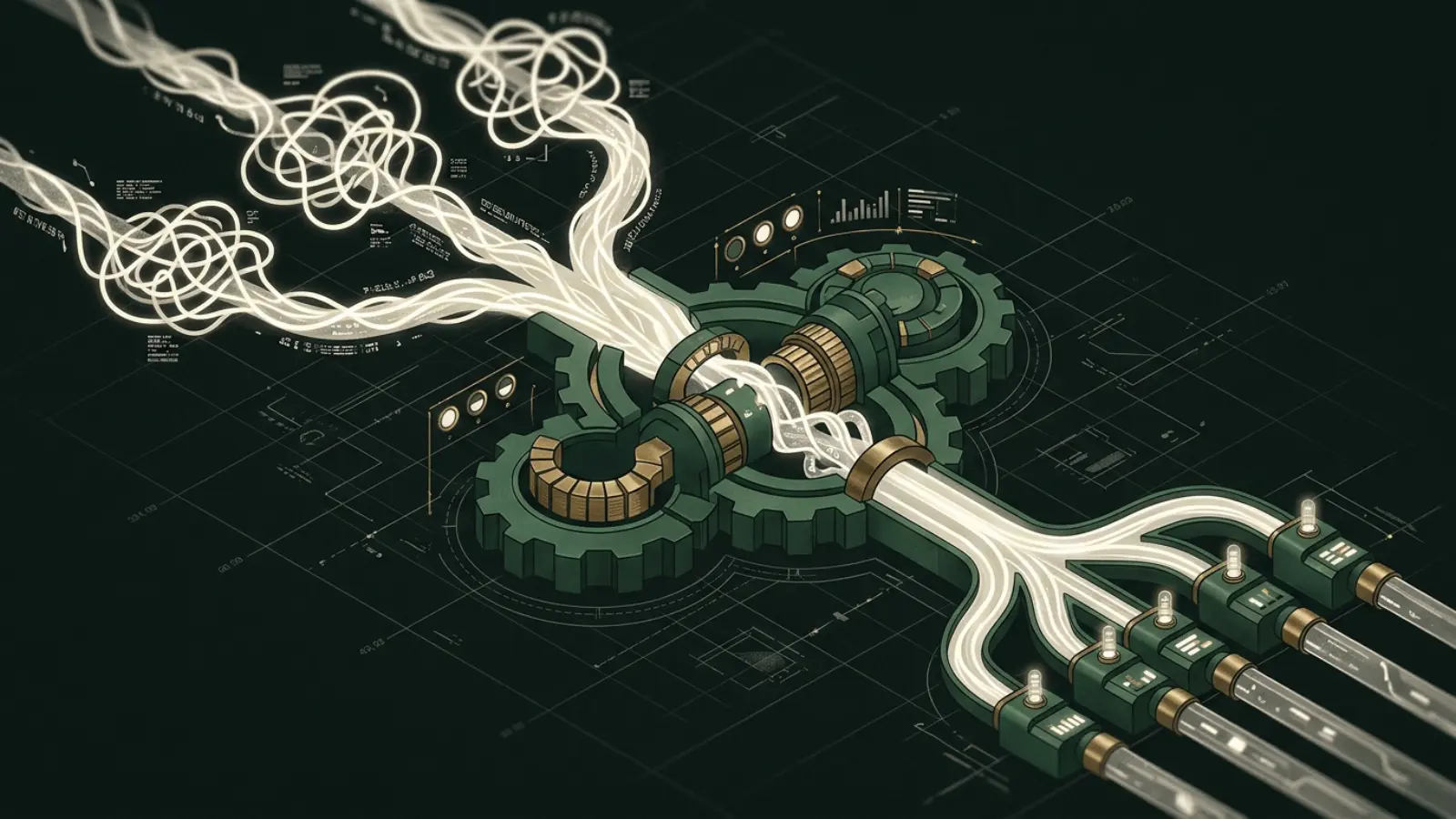
The Gap Between Discussion and Action
During a fast-paced conversation, capturing every detail is difficult. Notes are usually written in shorthand, missing context, deadlines, and explicit owners. When team members return to their daily work, they must spend extra energy interpreting what was actually agreed upon.
This friction often leads to delayed projects or forgotten commitments. Without a direct path from the meeting room to the task tracker, valuable ideas simply fade away.
A Practical Human-Approved AI Workflow
Instead of expecting AI to manage your projects automatically, use it to draft the initial task list for human review. This workflow keeps the process reliable and realistic:
- Feed the raw meeting transcript or unstructured notes into your AI tool.
- Ask the AI to identify decisions, action items, proposed owners, and implied deadlines.
- Review the generated list to correct misunderstandings, adjust dates, and reassign tasks.
- Copy the approved tasks directly into your team tracker.
Keeping People in Control
AI is excellent at organizing messy text, but it lacks organizational context. It does not know who is currently overloaded, which client is the highest priority, or when a deadline is unrealistic. The final decision must always rest with a human project lead.
By treating the AI output as a draft, you ensure that every assigned task has a real owner who has actively agreed to the responsibility. This step prevents the confusion of automated assignments that nobody actually owns.
Understanding the Limits of Automation
To keep this workflow effective, avoid over-automating the process. Successful teams recognize several key boundaries:
- Do not allow AI to push tasks directly to your tracking system without a manual review step.
- Do not assume the AI understands subtle team dynamics or unwritten agreements.
- Remember that AI cannot enforce accountability; only clear communication and human leadership can.