When Business Systems Disagree: Which Record Should AI Trust?
Learn how to resolve conflicting customer records across tools with clear field ownership and human verification.
Articles
Practical notes on software, automation, internal tools and AI-assisted workflows with human approval.
Learn how to resolve conflicting customer records across tools with clear field ownership and human verification.
Learn how AI agents should detect changed interfaces, pause safely, log context, and hand control back to human teams.
Learn how to track checkpoints and verify partially finished AI tasks when network drops or service timeouts interrupt multi-step operations.
Learn how to prevent accidental duplicate actions when automated systems retry interrupted workflows.
Learn how to assign maintainers, document data dependencies, and keep manual fallbacks for internal tools created with AI assistants.
Learn how to draft an operational brief before building internal tools with AI to keep workflows grounded, secure, and clearly defined.
Learn how service teams manage high draft output without overwhelming their staff or compromising editing standards.
Learn how to set clear acceptance criteria, inspectable deliverables, and stopping rules before delegating tasks to AI assistants.
Learn how separating drafting from automated review catches structural errors while keeping final evaluation in human hands.
Evaluate automated workflows against archived projects and messy exceptions to spot errors before giving tools direct contact with client records.
Learn why read-only AI observation helps teams find bottlenecks and missing inputs safely before granting automated write access.
Learn how to budget routine AI tasks, manage exceptions, and prevent runaway automated processing cycles in service operations.
Learn how service teams manage shared AI context with dated records, clear owners, and routine retirement of obsolete project notes.
Learn how to safely run AI agents on graphical interfaces without APIs by setting clear verification gates, boundaries, and manual fallbacks.
Learn how to define metric boundaries, time windows, and exclusions before asking automated tools to interpret business numbers.
Learn how to separate reading, drafting, and approvals when connecting AI assistants to your business tools safely.
Learn how to delegate recurring business tasks to AI agents safely using explicit boundaries, structured proof, and dependable stop triggers.
Learn how to extract clear tasks and background details from emails while keeping teammates firmly in control of decisions.
Learn how to capture implicit founder knowledge into clear reference assets so growing teams can handle recurring decisions with confidence.
Discover how automated workload summaries help small teams spot bottlenecks, track active commitments, and plan capacity with human control.
Draft customer messages in multiple languages with AI assistance while keeping human review and glossaries in place.
Coordinate client appointments smoothly by automating standard availability checks while reserving human judgment for complex requests.
Learn how structured intake forms and human-reviewed summaries reduce missing details and speed up project starts.
Structured feedback loops turn recurring AI errors into clear operational updates while keeping people in control of the final output.
Learn the essential data cleanup steps required to run dependable AI workflows without expecting automated systems to resolve messy inputs on their own.
Learn how to spot unstable workflows and why clarifying ownership prevents costly errors before automating key business operations.
Discover whether a custom form, deterministic automation, or an AI assistant best solves operational bottlenecks in daily business workflows.
Learn how to build a practical tagging taxonomy for tickets and documents with structured human oversight and steady operational rules.
Learn how document hygiene, ownership, and retirement cycles keep internal assistants reliable and accurate for everyday business support.
Discover why shared prompt templates need clear input data, acceptance criteria, and human accountability to run dependable business operations.
Learn practical operational signals to evaluate automated workflow impact without relying on inflated claims or unverified assumptions.
Learn how to turn exploratory artificial intelligence trials into reliable operational workflows with clear human oversight.
Learn how to evaluate AI initiatives using effort, risk, and utility. Practical criteria help your team focus on high-impact projects with human oversight.
Learn how small businesses assign clear operational ownership, review duties, and maintenance roles to keep AI workflows dependable.
Establish core intake rules before introducing automation to shared team inboxes so message ownership remains clear and accountable.
Learn practical escalation rules that balance fast resolution with senior oversight to protect team focus.
Learn how automated metric drafts paired with human review turn raw dashboard numbers into actionable operational context.
Learn how automated draft narratives help managers interpret operational variances quickly while maintaining thorough human review across every team report.
Learn how to turn manual spreadsheet edits into a reliable reviewable workflow with automated field checks and human approval.
Learn how combining structured intake forms with AI validation clarifies incoming service requests before work starts.
Learn how schema-first AI workflows extract names, amounts, and dates from PDFs while leaving final verification to human reviewers.
Build practical follow up workflows after client calls and proposals using structured AI drafts, clear schedules, and human approval.
Turn unstructured sales notes into clear CRM records with practical AI workflows and human review.
Learn how to use AI for structured content outlines while maintaining human editorial oversight, brand positioning, and quality.
Turn internal sales calls, project notes, and support tickets into structured marketing briefs through a clear, human-guided workflow.
Organize customer feedback into clear categories and action items using a structured review workflow.
Build a structured after sales follow up workflow using AI draft assistance while keeping human review and account responsibility intact.
Learn how to structure complaint handling with practical AI summaries while keeping human review and responsibility at the center.
Establish clear review checklists for AI generated content to ensure context accuracy, tone consistency, and operational safety.
Improve weekly team reviews by structuring operational inputs, clarifying blockages, and focusing meetings on decisions rather than status gathering.
Improve internal shift and role handovers with a clear structured structure and human review for seamless team collaboration.
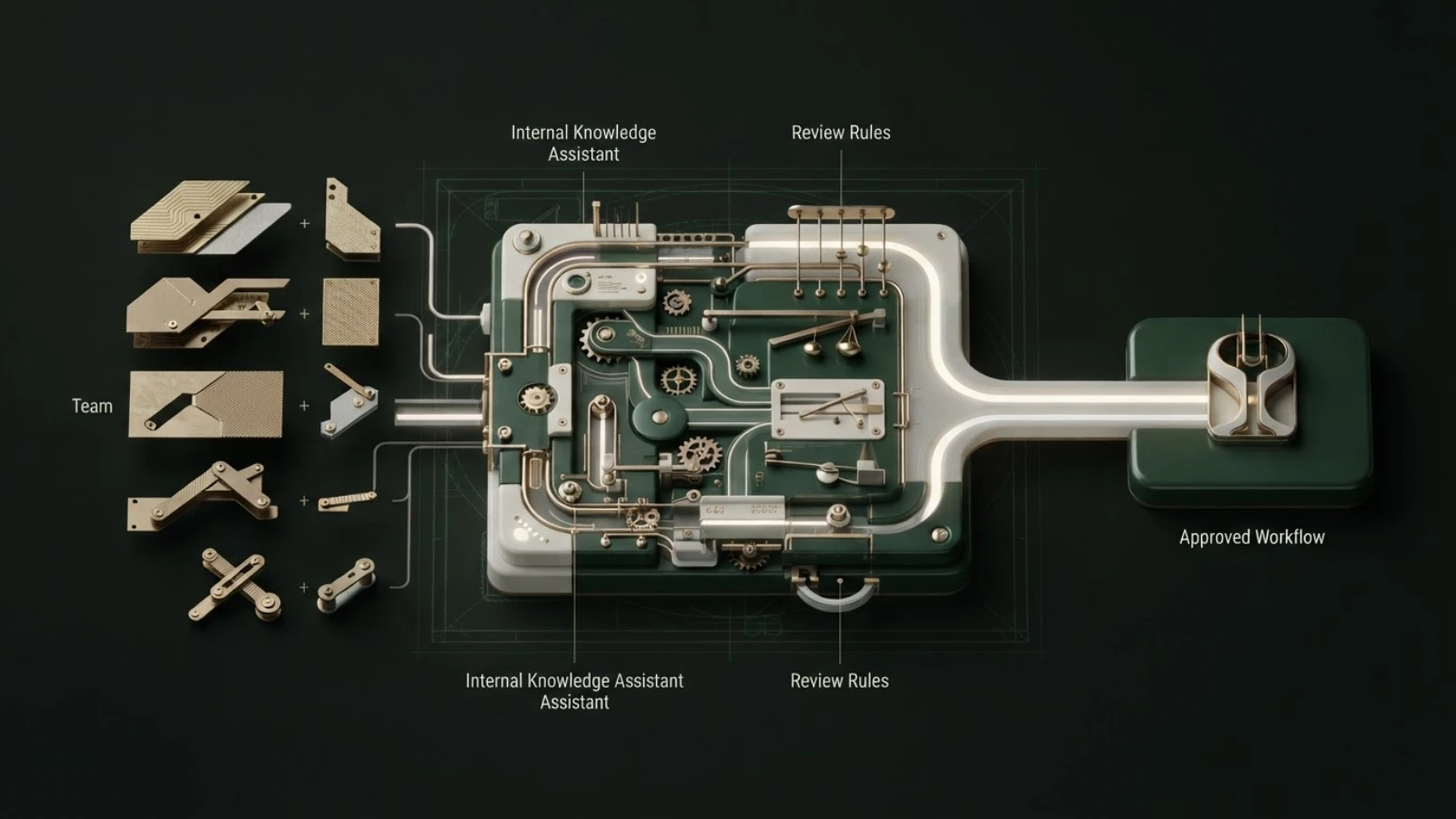
Learn how to build a reliable internal AI assistant with clear human review rules, strict boundaries, and source verification.
Learn how to streamline project status updates with assisted workflows, clear team review, and reliable client communication.
Build actionable onboarding checklists for new hires using AI drafting, structured handoffs, and clear human oversight.
Organize internal purchase requests without chaos. Learn how simple workflows and AI intake keep ordering clear, structured, and reviewable.
Organize inbox chaos with smart supplier email routing. Learn how AI triage helps teams direct messages while maintaining human oversight.
Capture required project details on initial quote requests to reduce back and forth email threads and start work faster with assisted workflows.
Learn how to turn scattered chat notes, emails, and documents into a practical internal FAQ with human-approved AI workflows.
Learn how to route customer support requests faster using AI triage while keeping sensitive or complex cases with human agents.
Learn how to turn messy notes and team interviews into clear, reliable SOPs using AI as a drafting assistant with human review.
Learn how to turn messy meeting notes into clear, assigned tasks using a practical AI workflow that keeps humans in control.
Establish a consistent lead qualification process using practical criteria and human confirmation to stop wasting time on poor fit requests.
Improve your CRM data quality. Learn how to use AI to flag errors and prepare fixes while keeping your team in control of final approvals.
Learn how to use AI as a first pass sorter for your shared inbox while keeping your team in control of final decisions and customer relationships.
Learn how to document and structure your daily office tasks so they are ready for smart delegation or human in the loop AI support.
Learn how to keep your team in control with a practical workflow that combines AI productivity and essential human review.
Learn how small service businesses can identify and build their first practical, human-approved AI workflow to save time and reduce operational friction.
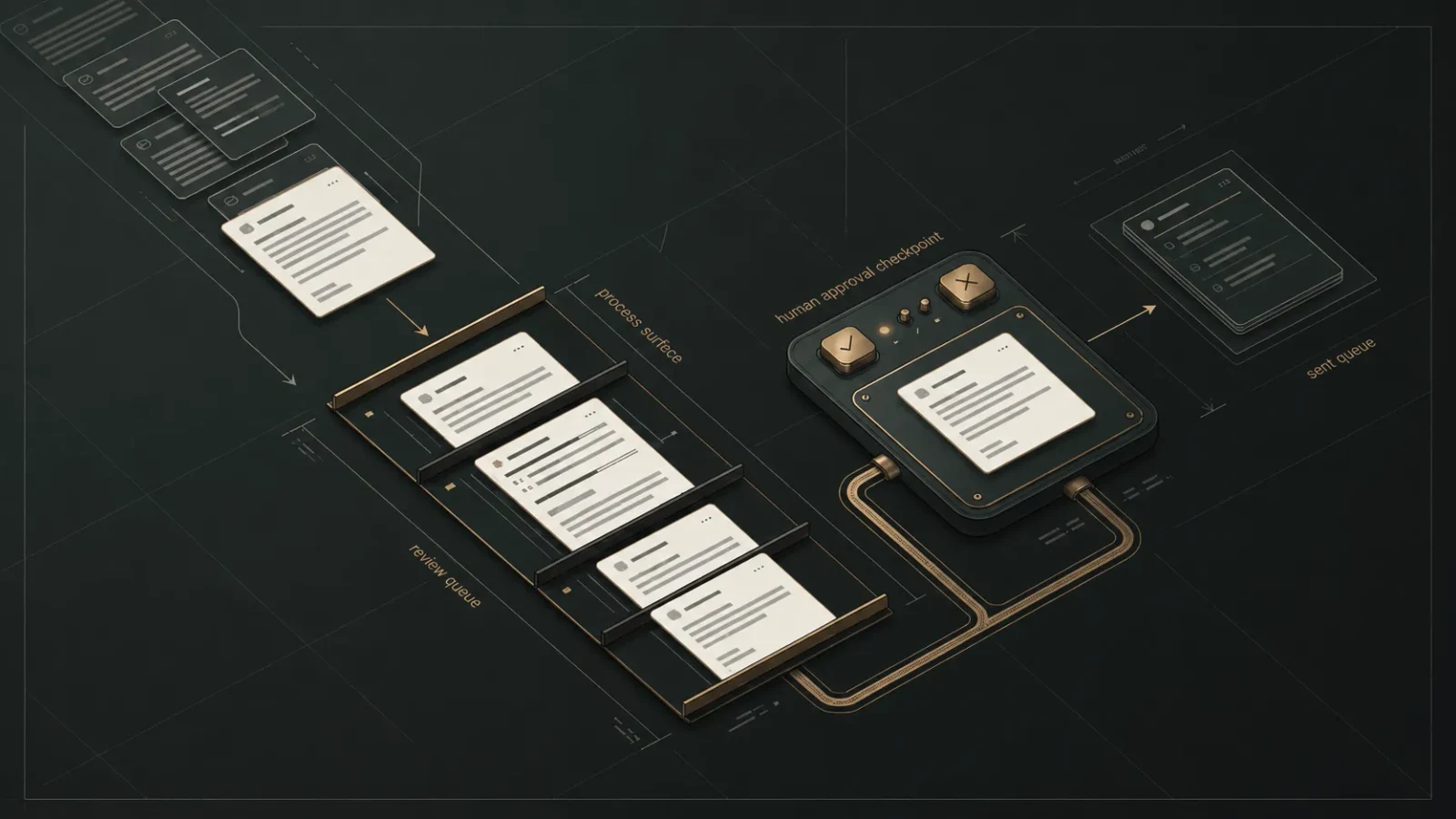
AI email triage works best when it prepares priorities, summaries, and draft replies for human approval instead of sending messages on autopilot.