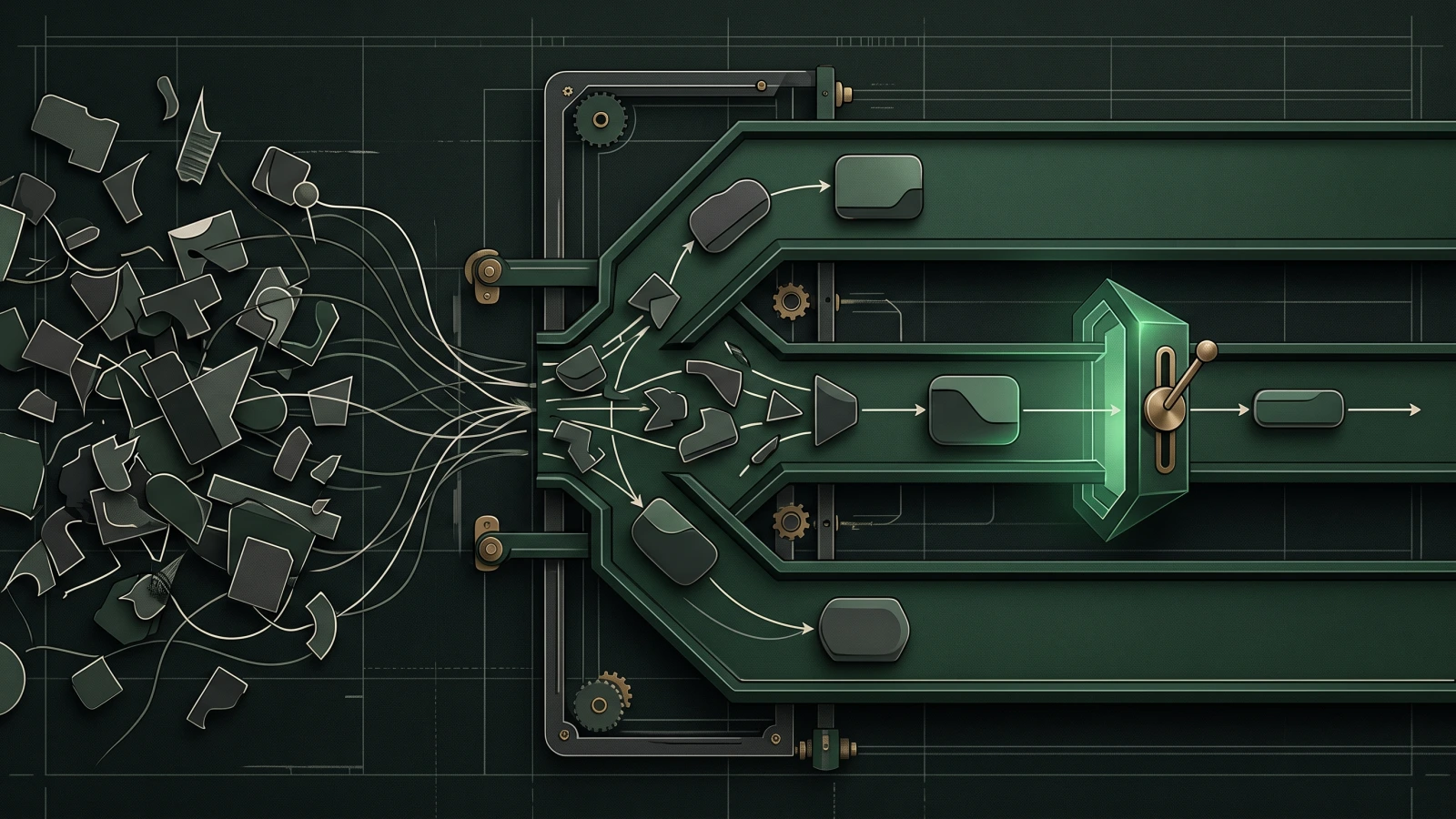
The Small Team Workflow Challenge
When a team is small, everyone handles a bit of everything. While this flexibility is great at first, it quickly becomes a bottleneck. Important steps are forgotten, files are misplaced, and onboarding a new team member or virtual assistant feels like an impossible task because the rules of the work are unwritten.
The solution is not to buy expensive software or attempt complex automation immediately. Instead, the first step is to map out your existing processes into clear, repeatable steps that anyone, or even a simple digital tool, can follow.
Mapping Your Process Before Adding Technology
To turn a messy administrative task into a clean workflow, you need to break it down into five core components. Documenting these elements removes the guesswork from daily operations:
- Triggers: What exact event starts this process, such as a new email or a form submission?
- Inputs: What files, data, or pieces of information are required to begin?
- Decisions: What are the clear rules used to evaluate the inputs?
- Approvals: Who needs to sign off on the work before it can proceed?
- Outputs: What is the final result, such as a sent invoice or an updated database entry?
The Power of Human Approved AI Workflows
Once your workflow is documented, you can safely introduce AI to handle the repetitive parts. However, keeping a human in the loop is essential for maintaining quality and security. AI should act as a supportive assistant, not an unsupervised decision maker.
For example, an AI tool can draft a response to a customer inquiry based on your documented guidelines, but a team member must review, edit, and click send. This approach combines the speed of technology with the critical thinking and responsibility of your team.
Knowing What Not to Automate
Not every administrative task is a good candidate for automation. It is important to recognize the limits of technology to avoid costly errors and broken customer relationships.
Tasks that require deep empathy, complex negotiations, or high financial risk should always remain fully manual. Focus your optimization efforts on high volume, low risk tasks where the rules are consistent and the outcomes are highly predictable.