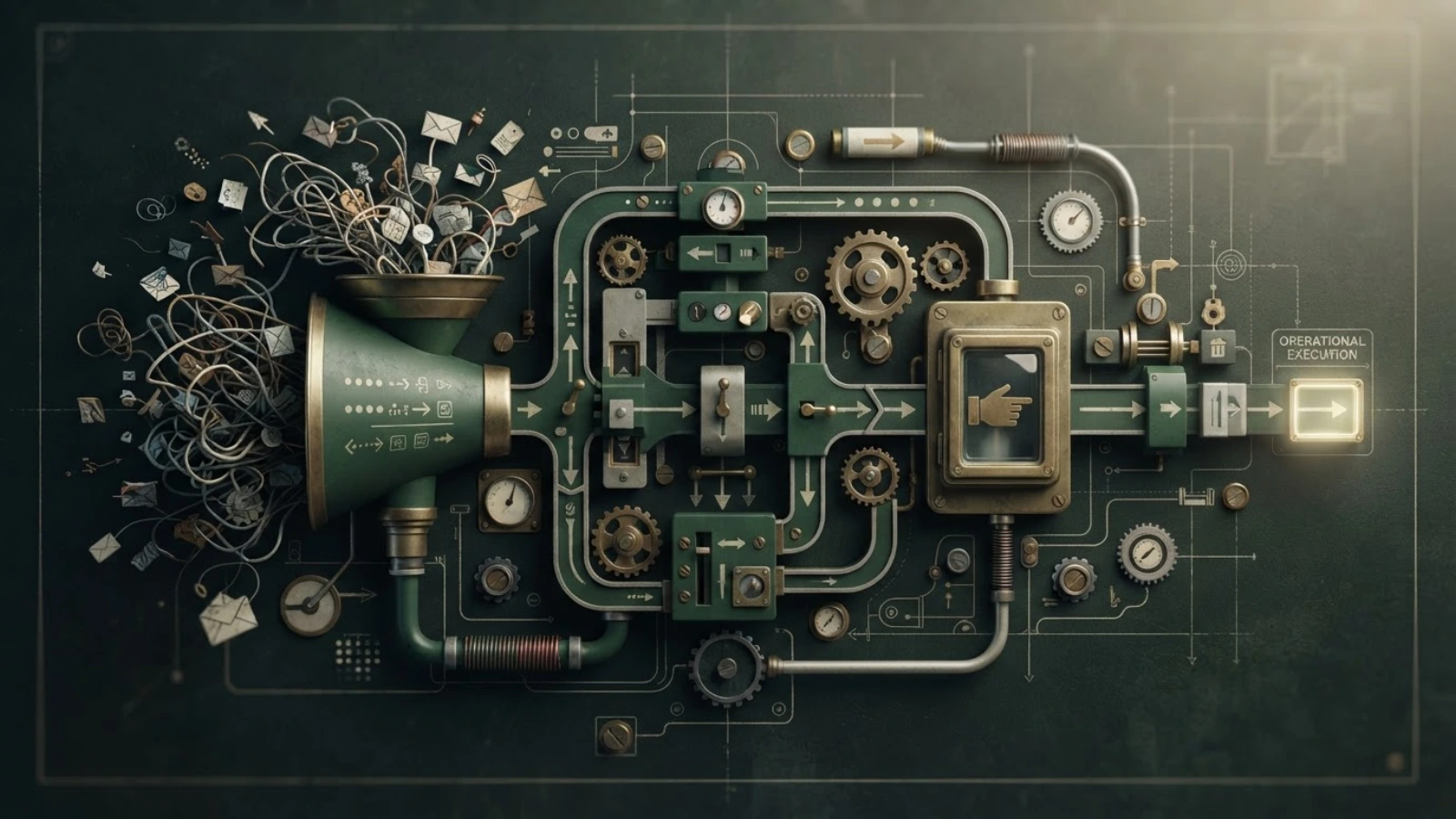
The Shared Inbox Bottleneck
When multiple team members share responsibility for a single inbox, manual triage becomes a constant distraction. Team members must repeatedly interrupt their core work to scan incoming emails, decide who should handle them, and apply tags. This uncoordinated process frequently leads to duplicate efforts or, conversely, important messages being overlooked during busy periods.
Handing the entire process over to fully automated bots is rarely the answer. Customers easily spot canned, machine-generated replies, which can damage trust when complex or sensitive issues arise. The ideal solution lies in using technology to organize the work, not to replace the human relationship.
The Human-Approved AI Workflow
A practical AI-assisted workflow acts as an intelligent assistant that prepares the work for your team. Instead of sending automated replies directly to customers, the AI operates entirely behind the scenes to analyze and organize incoming mail.
- Analyzing content: The system reads the incoming message to understand the customer's intent and emotional tone.
- Proposing metadata: It suggests the most appropriate category, priority level, and internal owner.
- Drafting context: It highlights key details or drafts a internal summary to help the agent get started quickly.
This preparation ensures that when a team member opens the inbox, they do not face a chaotic list of unorganized emails. Instead, they see structured tasks with clear recommendations, ready for a quick human confirmation.
Keeping People in the Loop
The core of this strategy is that the AI only proposes actions; humans make the final decisions. This approach preserves accountability and ensures high-quality interactions.
- One-click confirmation: Agents can accept the AI's suggested category and owner with a single click, or easily change them if the system misinterprets a nuance.
- Handling edge cases: Complex, angry, or highly unusual messages are flagged immediately for senior team members, preventing automated mistakes on critical accounts.
- Clear ownership: Every conversation is explicitly assigned to a real person, ensuring that no ticket is left without a clear owner responsible for the final resolution.
Setting Boundaries for Automation
To maintain high standards, teams must define exactly what the AI should and should not do. Simple, repetitive administrative tasks are excellent candidates for automation, whereas relationship-building and complex troubleshooting must remain human.
For example, let the system tag billing questions or route technical bugs to the engineering queue. However, avoid letting the system draft and send final resolutions to customers without a thorough human review. By drawing these clear boundaries, your team can work faster and more accurately without losing the personal touch that keeps customers loyal.